
|
Getting your Trinity Audio player ready...
|
Chemical peels are popular and profitable, but adding them to your med spa’s services means navigating your state’s oversight rules.
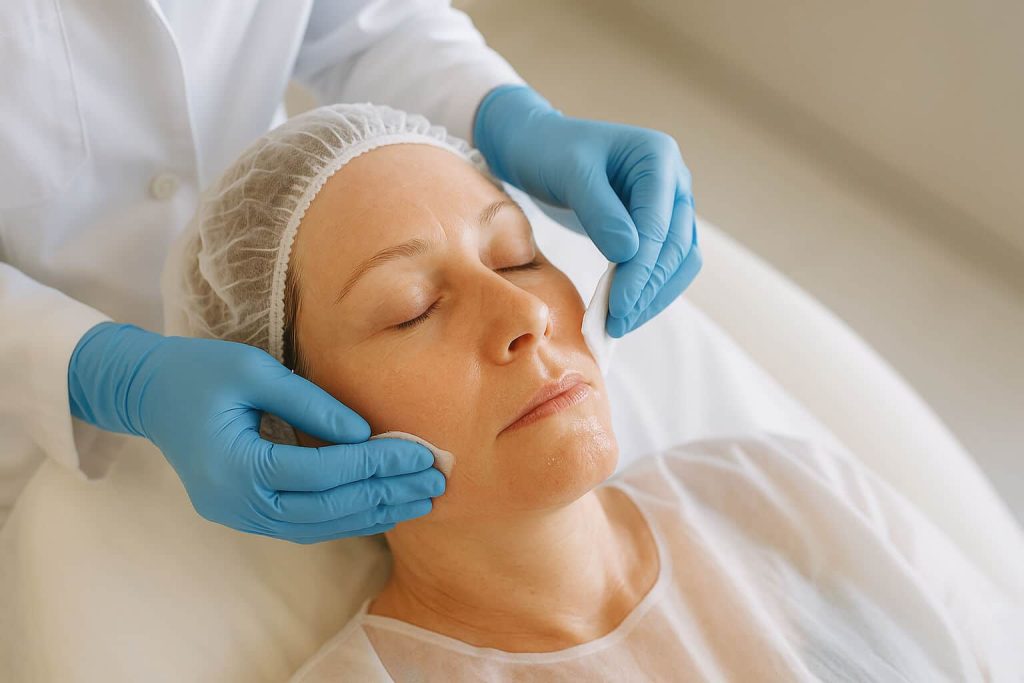
Chemical peels are a popular treatment for clients seeking smooth, younger-looking skin. But before offering peels at your med spa, you need to know the legal requirements for providing these services. Who can perform them? What are the risks? If you’re a medical spa owner, manager, or entrepreneur who is not a physician, and you are looking to add chemical peels to your list of services, this article is for you.
How Chemical Peels Are Classified
Before discussing who can perform chemical peels, it is crucial to understand how peels are generally categorized. Superficial peels typically affect only the outermost layer (the stratum corneum). Medium peels reach the upper to mid-dermis. Deep peels penetrate the lower dermis. While these categories provide a general framework, the states define them differently. Because of this variation, med spa owners and practitioners must understand their own state’s definitions before offering any type of peel.
Are Chemical Peels Considered Medical Treatments?
In some states, licensed aestheticians may perform certain superficial chemical peels without physician supervision. However, many states still classify even superficial peels as medical procedures that require at least physician delegation or oversight, depending on the depth and formulation of the peel.
Medium peels are generally considered to be the practice of medicine. A physician or a qualified advanced practice provider must examine the patient, create a treatment plan, and either perform the peel or delegate it to a licensed clinician, such as a registered nurse, who is working within their legal scope of practice.
In most states, deep chemical peels are limited to physicians because of significant risks like scarring, pigment changes, and infection. A small number of states allow certain advanced practice providers to perform these deeper peels under strict delegation agreements. Aestheticians are not permitted to perform deep peels under any circumstances.
Why You Need a Qualified Medical Director
A qualified medical director should be a physician who is licensed, in good standing, and properly trained to oversee treatments in your med spa. In some states, a nurse practitioner with full practice authority may be able to serve in this role. While board certification in dermatology or a related specialty is not always required, it can be beneficial for advanced procedures such as chemical peels.
A medical director can develop treatment protocols, provide direct supervision, and delegate tasks appropriately to other licensed clinicians. Most crucially, a medical director can address complications as they arise.
Risks of Chemical Peels Without Proper Oversight
The different types of peels bring varying degrees of risk. A light peel might cause only a few days of mild redness, while a deep peel can take weeks to heal and carries a higher chance of scarring or infection. Although many peels are marketed as “non-invasive,” they still require a thorough medical assessment, careful patient selection, and proper aftercare. Having a qualified medical director who is genuinely engaged, not just lending their name, is essential to ensure staff stay within their legal scope, treatments are performed safely, and any complications are managed promptly and appropriately.
See our related articles:
- “What Illinois Medspa Owners Need to Know About IDFPR’s Guidelines“
- “Botox Malpractice: How to Protect Yourself From Liability“
Business Ownership Considerations When Adding Chemical Peels
If your aesthetics business currently offers only cosmetic services and you want to add medical treatments, you may need to change your business structure. In certain states, corporate practice of medicine (CPOM) laws prevent non-physicians from owning or controlling medical practices.
In a CPOM state, a non-physician business owner cannot simply hire a physician as an employee to offer medical procedures under their existing entity. Instead, only physician-owned professional entities—or, in some cases, entities owned by nurse practitioners with full practice authority—can provide medical services and receive payment for them. It is crucial to verify your specific state’s rules, as ownership rights for NPs vary significantly.
One common workaround is to establish a Management Services Organization (MSO). The MSO, which can be owned by non-physicians, handles business and administrative functions. The MSO then contracts with the physician-owned entity that provides the medical services, and the physician entity pays the MSO a management fee.
See our related videos, “MSO (Management Services Organization) Basics” and “The Corporate Practice of Medicine in Illinois“.